
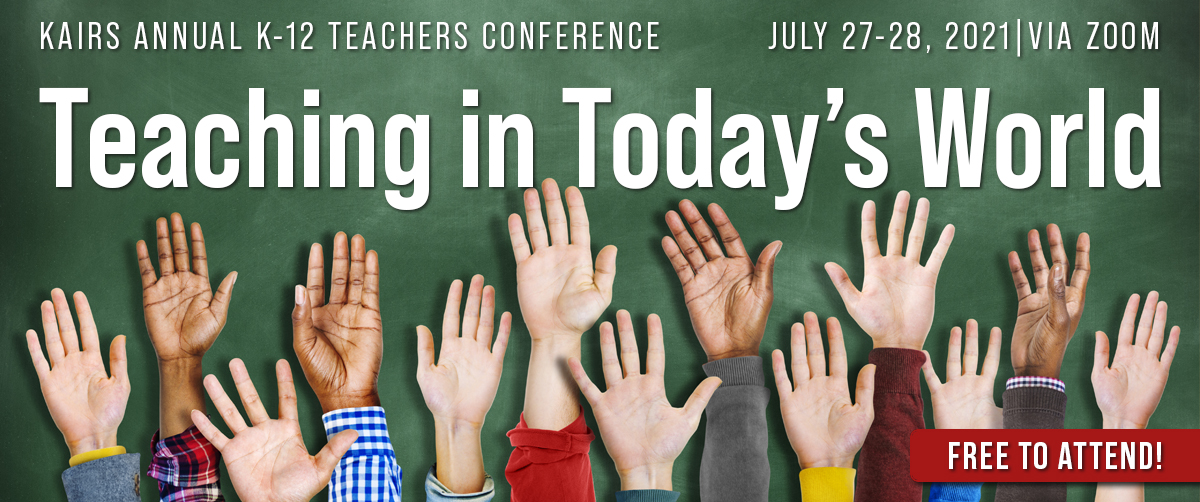
TEACHING IN TODAY'S WORLD
KAIRS K-12 Teacher's Conference
July 27-28
Conference Schedule: 9:30 am – 4:00 pm
Location: Wherever you are via Zoom!
Speaker Schedule:
Keynote - 9:30-11:00 a.m. - Dr. Peg Dawson: “Ten Steps for Embedding Executive Skills into Daily Classroom Routines and Instruction."
11:00 a.m. - 11:45 a.m. - Lunch
1:15 p.m. - 2:45 p.m. - Dr. Taylor Bullock: "Race-Based Conversations with Kids Matter."
3:00 p.m. - 4:00 p.m. - Dr. Yong Zhou: "Students as Change Partners: Student Self-determination and Autonomy."
DAY TWO - WEDNESDAY, JULY 28:
9:30 a.m. - 11:00 a.m. - Dr. Immordino Yang: "Solving the Frankenstein Problem: Why All Learning is Social and Emotional to the Brain."
11:00 a.m. - 11:45 a.m. - Lunch
12:00 p.m. - 1:00 p.m. - Question and Answer session with Dr. Immordino Yang
3:00 p.m. - 4:00 p.m. - Dr. Bradley Busch: "Developing Resilient and Motivated Learners."
Speakers
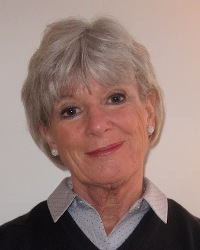 Dr. Peg Dawson
Author and Psychologist
Tues., July 27: Keynote 9:30 to 11:00 a.m.
“Ten Steps for Embedding Executive Skills into Daily Classroom Routines and Instruction.”
Executive skills are task-oriented skills that underlie students’ ability to learn. Although seldom taught explicitly, many educators now see that students who are strong in these skills are more successful than those who aren't. This workshop will provide step-by-step instructions for incorporating executive skills into everyday classroom lessons and activities. After an introduction to executive skills that includes definitions and an overview of how brain development impacts executive skills, participants will learn how to: 1) connect classroom behavior to specific executive skills; 2) introduce executive skill concepts and terminology to students; 3) create classroom routines to help students with weak executive skills and to foster executive skill development in all students; 4) embed executive skills into lessons for whatever subject matter they are teaching; and 5) engage students in a problem-solving process to address both class-wide and individual issues associated with executive skill challenges.
Learning Goals: As a result of attending this workshop, participants will:
- Be able to define 11 executive skills and give examples of how these skills manifest themselves both as strengths and challenges in daily school and home activities.
- Learn a 10-step process for embedding executive skills into general education classrooms.
- Become familiar with a variety of strategies for teaching executive skills to students of all ages.
—
Dr. Peg Dawson
In over 40 years of clinical practice, Dr. Peg Dawson has worked with thousands of children and teens who struggle at home and in school. At the center of their struggles are often weak executive skills. Along with her colleague, Dr. Richard Guare, she has written numerous books on this topic for educators, mental health professionals, and parents, among them Smart but Scattered, Smart but Scattered Teens, Executive Skills in Children and Adolescents, and Coaching Students with Executive Skills Deficits. Peg is also a past president of the National Association of School Psychologists, and the International School Psychology Association, and is a recipient of NASP’s Lifetime Achievement Award.
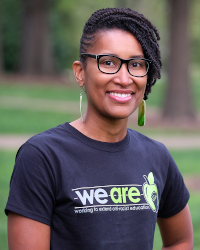 Dr. Rhonda Taylor Bullock
Co-founder and Lead Curator of we are
Tues., July 27: 1:15 p.m. to 2:45 p.m.
"Race-Based Conversations with Kids Matter."
This presentation helps attendees understand that children begin making meaning of race at very early ages. Unfortunately, racial biases begin to develop at this time. The presenter will share information about why educators, parents, & guardians should be focused on having race-based conversations with kids and will share how her organization navigates these tough conversations using literacy-based strategies.
Purpose of Presentation:
To Equip attendees with knowledge and skills to talk about race and racism with children.
By the end of the session participants will:
1. Have a book-list of recommended texts for children pre-kindergarten through 12th grade
2. Understand how to foster race-based conversations with children
—
DR. RHONDA TAYLOR BULLOCK is originally from Goldston, NC. In 2018, she earned her doctorate at UNC Chapel Hill in the Policy, Leadership, and School Improvement Program. Her research interests are critical race theory, whiteness studies, white children’s racial identity construction, and anti-racism. Some of her publications include Racial Identity Construction: A Critical Analysis of White Children Recognizing, Reifying, and Resisting Whiteness, Raising Conscious Kids: A Community-based Approach, and Challenging
Dr. Taylor Bullock is the co-founder and Lead Curator of we are, which stands for working to extend anti-racist education. As a non-profit, we are provides anti-racism training for children, parents and educators. we are uses a three-pronged approach to dismantle systemic racism in education and beyond by offering summer camps for children in rising 1st-5th grade, workshops for families, and professional development for educators.
Prior to starting we are, Dr. Taylor Bullock taught English for almost ten years at Hillside High School in Durham, NC, where she now resides. She is the wife of Dr. Daniel Kelvin Bullock and mother of son Zion and daughter Zaire.
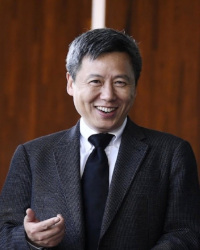 Dr. Yong Zhao
Foundation Distinguished Professor in the School of Education at the University of Kansas and professor in Educational Leadership at the Melbourne Graduate School of Education in Australia.
Tues., July 27: 3:00 to 4:00 p.m.
"Students as Change Partners: Student Self-determination and Autonomy."
Students have rarely been involved in making significant changes to their learning. Education reforms have typically focused on curriculum, teachers and teaching, and assessment, but rarely about helping students to become owners of their learning and learning environments. In this presentation, Professor Yong Zhao discusses the necessity of involving students as partners of educational change and owners of their learning. Professor Zhao will also discuss strategies to encourage and support student self-determination and agency.
—
Dr. Yong Zhao is currently a Foundation Distinguished Professor in the School of Education at the University of Kansas and a professor in Educational Leadership at the Melbourne Graduate School of Education in Australia. He previously served as the Presidential Chair, Associate Dean, and Director of the Institute for Global and Online Education in the College of Education, University of Oregon, where he was also a Professor in the Department of Educational Measurement, Policy, and Leadership. He is an elected member of the National Academy of Education and a fellow of the International Academy of Education.
Yong Zhao has been recognized as one of the most influential education scholars and has received numerous awards including the Early Career Award from the American Educational Research Association, Outstanding Public Educator from Horace Mann League of USA, and Distinguished Achievement Award in Professional Development from the Association of Education Publishers. He His works focus on the implications of globalization and technology on education. He has published over 100 articles and 30 books. His most recent publications include An Education Crisis Is a Terrible Thing to Waste: How Radical Changes Can Spark Student Excitement and Success (2019) What Works May Hurt: Side Effects in Education (2018), Reach for Greatness: Personalizable Education for All Children (2018), and Counting What Counts: Reframing Education Outcomes(2016).
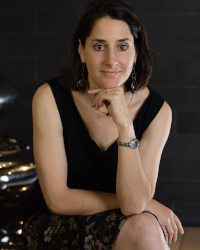 Dr. Mary Hellen Immordino-Yang
Professor of Education, Psychology and Neuroscience at the University of Southern California and Director of the USC Center for Affective Neuroscience, Development, Learning and Education (CANDLE)
Wed., July 28: 9:30 to 11:00 a.m.
"Solving the Frankenstein Problem: Why All Learning is Social and Emotional to the Brain."
Emotions and social relationships shape our thoughts, actions, and experiences—how we think and who we become—not just personally, but academically. How and why is this the case? And what does this mean for teachers and the design of educational environments and activities? Mary Helen Immordino-Yang will present her research on emotional engagement in the brain, showing how deep learning happens and highlighting the interdependencies of thoughts and feelings as students learn. Her studies reveal how effective schooling is not simply about what students know and can do, but about how students learn to learn, and about how they experience the learning process. The findings underscore the necessity of supporting students’ humanity—their character, citizenship and purpose—to optimally support their academic growth.
12:00-1:00- Deep-dive Discussion will focus on pedagogical practices that teachers can use to foster students’ intellectual, social and emotional dispositions for learning over time, and show how and why these dispositions connect to emotional health in developmentally appropriate ways.
Suggested pre-readings:
—
Dr. Mary Helen Immordino-Yang, EdD is a Professor of Education, Psychology and Neuroscience at the University of Southern California and Director of the USC Center for Affective Neuroscience, Development, Learning and Education (CANDLE). She studies the psychological and neurobiological development of emotion and self-awareness, and connections to social, cognitive and moral development in educational settings. She uses cross-cultural, interdisciplinary studies of narratives and feelings to uncover experience-dependent neural mechanisms contributing to identity, intrinsic motivation, deep learning, and generative, creative and abstract thought. Her work has a special focus on adolescents from low-SES communities, and she involves youths from these communities as junior scientists in her work.
A former urban public junior high-school science teacher, she earned her doctorate at Harvard University in 2005 in human development and psychology and completed her postdoctoral training in social-affective neuroscience with Antonio Damasio in 2008. Since then she has received numerous awards for her research and impact on education and society, among them an Honor Coin from the U.S. Army, a Commendation from the County of Los Angeles, a Cozzarelli Prize from the Proceedings of the U.S. National Academy of Sciences editorial board, and early career achievement awards from the AERA, the AAAS, the APS, the International Mind, Brain and Education Society (IMBES), and the Federation of Associations in Behavioral and Brain Sciences Foundation (FABBS).
Immordino-Yang was a 2018-2019 Spencer Foundation mid-career fellow.
She served on the U.S. National Academy of Sciences committee writing How People Learn II: Learners, Contexts and Cultures, and on the Aspen Institute’s National Commission on Social, Emotional and Academic Development.
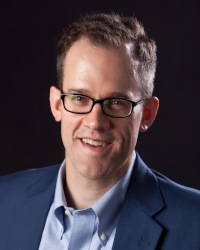 Dr. Philip Nel
Distinguished Professor of English at Kansas State University
Wed., July 28: 1:15 p.m. to 2:45 p.m.
“Why Adults Refuse to Admit Racist Content in the Children’s Books They Love.”
Why do we struggle with admitting how pain and love are entangled in cherished artifacts of our childhood? Childhood is where a psyche more susceptible (or more resistant) to racism begins developing, and children’s books are one of the best places to combat racism. To better educate adults who resist considering that beloved children’s literature may harbor racist content, this talk reads the “hate mail” inspired by my book Was the Cat in the Hat Black? The Hidden Racism of Children’s Literature and the Need for Diverse Books (2017), and offers some pedagogical strategies in response.
—
Dr. Philip Nel is University Distinguished Professor of English at Kansas State University. He is the author or co-editor of thirteen books, including Was the Cat in the Hat Black?: The Hidden Racism of Children’s Literature, and the Need for Diverse Books (2017), which was featured in Time magazine, The Atlantic, The Washington Post, the Chicago Tribune, and as a “Talk at Google” (viewed over 10,000 times). That work contributed to Dr. Seuss Enterprises’ March 2021 decision to cease publication of six Seuss books with racist imagery. Nel’s other books include a double biography of Crockett Johnson and Ruth Krauss (2012), Keywords for Children’s Literature (co-edited with Lissa Paul, 2011; second edition co-edited with Lissa Paul and Nina Christensen, 2021), Tales for Little Rebels: A Collection of Radical Children’s Literature (co-edited with Julia Mickenberg, 2008), The Annotated Cat: Under the Hats of Seuss and His Cats (2007), and four volumes of Crockett Johnson’s Barnaby (co-edited with Eric Reynolds, 2013, 2014, 2016, 2020). He gives lectures around the world (though, since March 2020, entirely via Zoom), blogs at Nine Kinds of Pie, www.philnel.com, and tweets as @philnel.
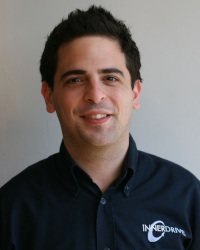 Bradley Busch
Chartered Psychologist and Director of InnerDrive
Wed., July 28: 3:00 p.m. to 4:00 p.m.
“Developing Resilient and Motivated Learners.”
This session will look at the latest research on how do we help students develop resilience, determination and intrinsic motivation. As well as highlighting the seminal studies in this area, this interactive session will give practical tips and strategies that teachers can implement in their classroom immediately.
—
Bradley Busch is a chartered psychologist and director of InnerDrive. He is one of the leading experts on how psychological research can best help students and teachers improve how they think, learn and perform. He wrote two regular blogs for The Guardian: ‘The Science of Learning and Teaching’ and ‘Lessons From Research’. Outside of education, he works with Premiership and international footballers, as well as has helped members of Team GB win medals at London 2012 and Rio 2016.
Register Now for the 2021 Teacher's Conference!
Register Today! Registration Is Free!

Conference Attendees Can Receive One Graduate Credit from Friends University
To enroll for the Friend's University credit hour, head to this website www.friends.edu/
Conference Questions?
Dr. Jamie Finkeldei, KAIRS Vice President/Treasurer
Associate Superintendent, Catholic Diocese of Wichita
316-269-3950
This email address is being protected from spambots. You need JavaScript enabled to view it.
or Amy Pavlacka, KAIRS Communications Director
This email address is being protected from spambots. You need JavaScript enabled to view it.
Like us on Facebook!